
V2G Mass Adoption? When?
The global energy transition is accelerating, requiring seamless interoperability between electric utilities, transportation, and smart energy systems. The use of EV batteries for grid support services (V2G) opens a large but complex opportunity to improve the carbon footprints and efficiency of two of the largest industries in the world.
For instance, EPRI estimated that the total EV battery capacity in the US would equal the coincident peak load of the US grid (~700GW) by 2035 [1]. And a recent synthesis of research by QualityLogic estimated that V2G-AC in the US could contribute 10s of GW in storage capacity and grid support services to the US Grid [2].
In Australia, “enX has estimated that the usable storage capacity in Australia’s EV fleet will be over three times total NEM storage capacity by 2050. By the early 2030’s, total EV fleet battery capacity is likely to surpass all other forms of storage in the NEM, including Snowy 2.0. The near-term capital cost premium for enabling V2G is a fraction of the cost of large-scale storage. The basis of this cost advantage is that V2G only requires a marginal increase in the cost of installing a V2G-capable charger. Consumers will have already paid for the battery in the car”.[3]
Achieving the potential of V2G is arguably the most complex integration of a Distributed energy Resource (DER) that modern technology is tackling. Successfully scaling V2G requires a combination of new technologies, standards (many still in development), policy and business drivers (also in development) and interoperability.
QualityLogic recently hosted a webinar on V2G: What You Need to Know in 2026. As part of the webinar, we asked attendees a few questions and the answers were compelling enough to us that we decided to share them in this blog.
An Unscientific Poll on V2G: Results
Over 40 of the attendees responded to a set of three questions aimed at characterizing the audience and their views on V2G. The fact that over 150 people from around the world registered and nearly 50% attended (many were from Asian or EU time zones), tells us one thing: V2G is one of the priorities for 2026 on a global basis. Understanding it and implementing it are becoming priorities in 2026.
Our three questions of interest were:
- Q1: Why did you attend the webinar?
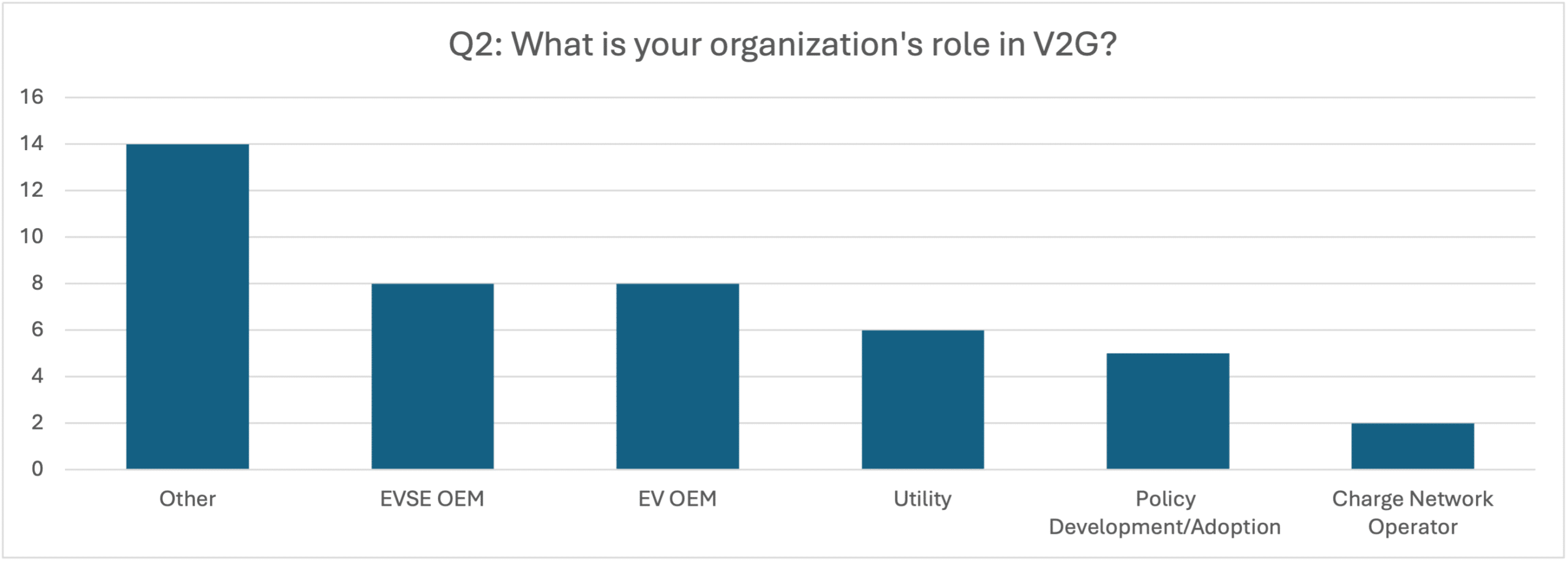
- Q2: What is your organization’s role in V2G?
- Q3: What is your view on the future of V2G? (Select all that apply)
The educational need stands out.
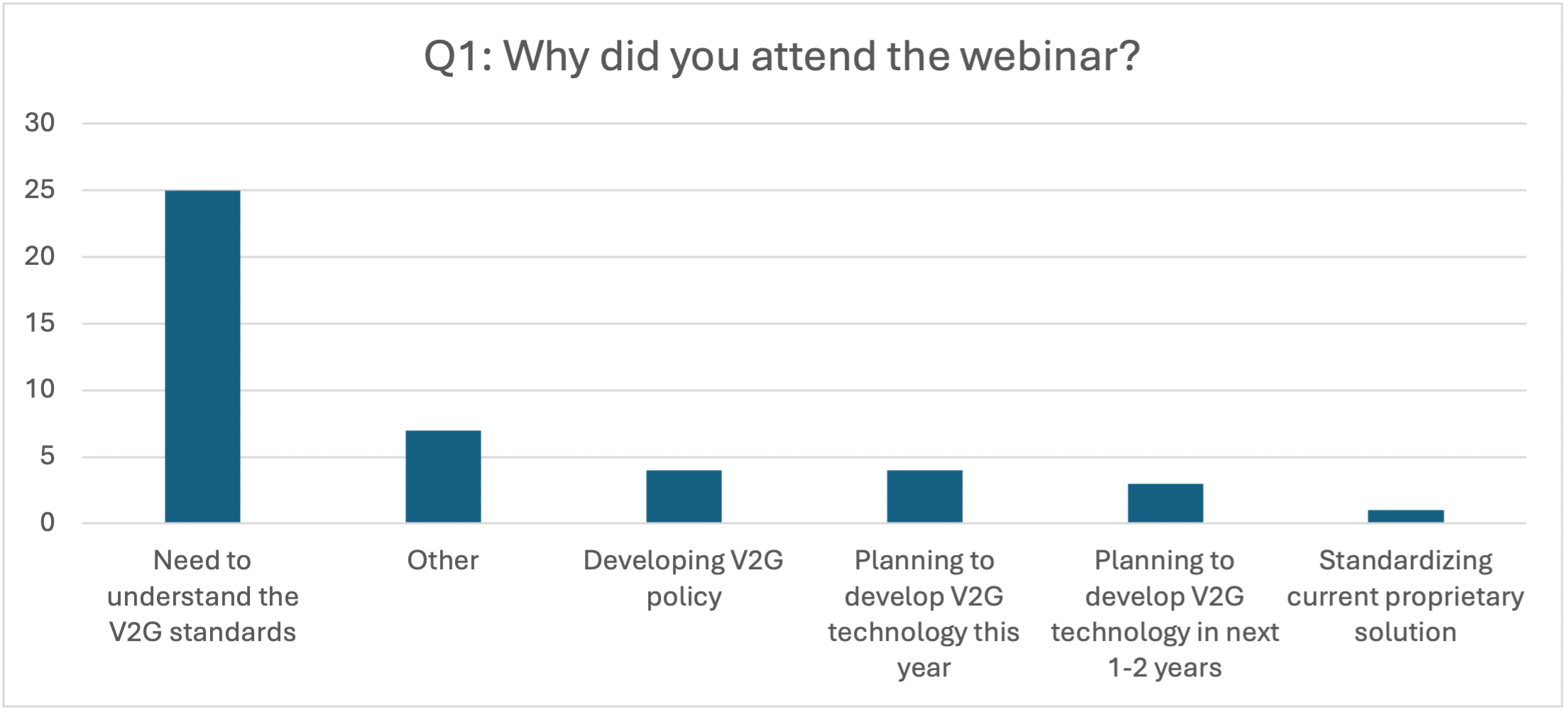
Over 50% of respondents attended to learn about V2G. People have priorities and this is becoming one.
And the diversity of participants shows how broad the interest is. We’d hope for this breadth of industry interest because of the number of actors required for V2G: utilities, EV and EVSE OEMs, policy makers and charge network operators.
What we found most interesting were the views on when V2G would start scaling.
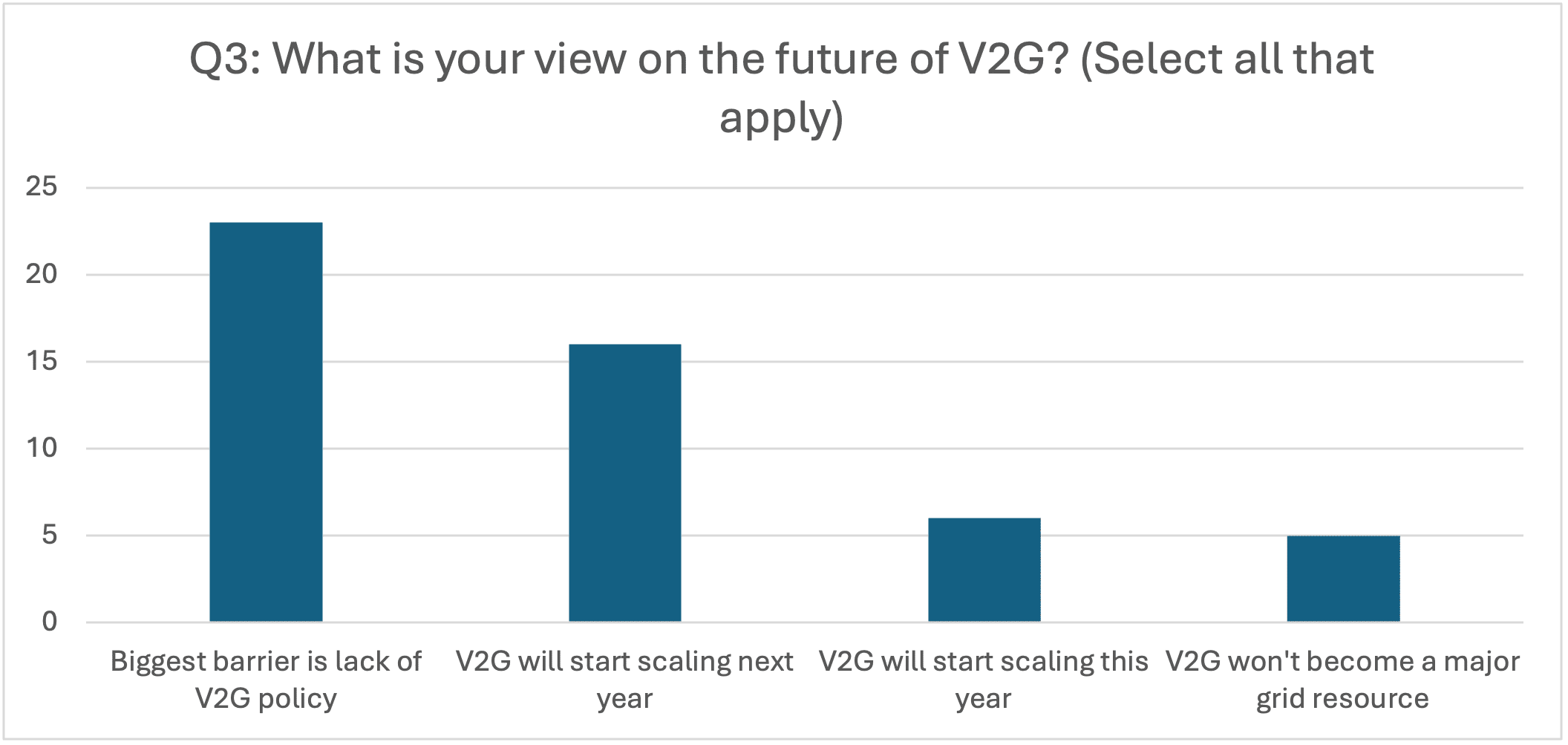
We’ve been hearing “someday” for the last few years. But over 50% of the (admittedly unscientific) survey respondents thought V2G would start scaling in 2026 (15%) or next year (41%).
This is pretty impressive considering that 1) the policy side of V2G is just emerging – long-term business viability is needed for V2G; and 2) the EV and renewable headwinds in the US would suggest a slower adoption rate. Our hypothesis: V2G is a unique synthesis of technologies and industries that can help address the electricity affordability challenges.
- Presented at an October 2022 EPRI Webex. Based on EIA projections of EV populations. With recent changes in US EV policy, the EV growth may be slower than the 2022 estimate.
- Presented at the 6th V2G Forum, October 23, 2025.
- enX (2023) Opportunities and challenges for bidirectional charging in Australia. Referenced in the National Roadmap for Bidirectional EV Charging, 12 February 2025